It is 7:45 AM on a Tuesday morning. Your daughter has a new rash, you have a work call in the morning, and the thought of a two-hour wait at a walk-in clinic makes you tired before you have found your keys.
For many common health concerns, the first step doesn’t have to be a drive. Telemedicine urgent care lets you start with a quick text, call, or virtual visit, so you get guidance fast and decide on next steps without rearranging your day.
At Resolute Integrative Health, that access is part of your membership. And unlike the telehealth apps you see advertised, the person on the other end already knows you. Below, we cover what works well virtually, what needs an exam, when to go straight to the ER, and why that existing relationship makes remote care safer.
What Telemedicine Urgent Care Looks Like in Direct Primary Care
Most telehealth apps are one-time transactions: you enter your insurance, wait in a digital queue, and see whoever is available. Telemedicine inside Direct Primary Care works differently. Because you pay a flat monthly membership, reaching out is part of the relationship, not a separate purchase.
Our DPC members get:
- Phone, text, and email with your provider for questions, follow-ups, and guidance between visits
- Virtual visits when appropriate for follow-ups, certain conditions, and ongoing care
- After-hours phone or text for truly urgent matters that can’t wait until the next business day. Do note though, that additional fees apply and Resolute cannot always guarantee after-hours response nor appointments.
- Same-day or next-day in-person visits, by appointment, when an exam is needed
- No added visit fee for urgent visits, whether during business hours, on weekends, or after hours by appointment
That last point matters. When every contact comes with a copay, people tend to wait and hope a symptom fades. When asking a question costs nothing extra, it’s easier to reach out early, which is often when a concern is simplest to address.
Common Concerns Well-Suited to Virtual Care
Virtual care is a fast starting point, not a replacement for every visit. For these concerns, a message or call often gives us enough to offer guidance, adjust a plan, or decide together that you should come in:
- Minor infections and everyday illness. Cold symptoms, a lingering cough or sinus pressure are often mild and may improve with conservative at-home care and watchful waiting. We can help you determine what to monitor, what supportive care may be appropriate, and when further evaluation is needed. Depending on your symptoms and how they are progressing, we may recommend an in-person appointment for a closer assessment.
- Minor infections and everyday illness. Cold symptoms, a lingering cough, sinus pressure, or possible bladder infection symptoms are often mild and may improve with conservative at-home care and watchful waiting. We can help you determine what to monitor, what supportive care may be appropriate, and when further evaluation is needed. Depending on your symptoms and how they are progressing, we may recommend an in-person appointment for a closer assessment.
- Rashes and skin concerns. A clear photo lets us review a new rash, irritated patch, or angry-looking bite quickly and decide how soon you should be seen.
- Medication questions and refills. Refills, side effects, dose timing, or whether a supplement is okay to add. With your medication list already on file, these are usually handled with a short message.
- Symptom check-ins. Seen Monday and wondering by Wednesday whether recovery is on track? A quick “Is this normal?” helps us catch anything that isn’t improving.
- Routine follow-ups and results reviews. Chronic condition follow-ups, lab results, and home readings like blood pressure or blood sugar can often be reviewed without a trip in.
| Concern | Good first step | What often happens next |
| Cold, cough, sinus symptoms | Text or call | Guidance, or an in-person exam |
| Possible bladder infection | Text or call | Same-day or next-day visit |
| New rash or skin irritation | Text a photo | Remote guidance or clinic exam |
| Medication refill or question | Message | Handled directly |
| Chronic condition follow-up | Virtual visit | Plan review without a drive |
| Minor sprain or simple cut | Call first | Clinic visit, often same day |
This table is general education, not a diagnosis. Your provider will help you choose the right next step.
When You Need an In-Person Visit
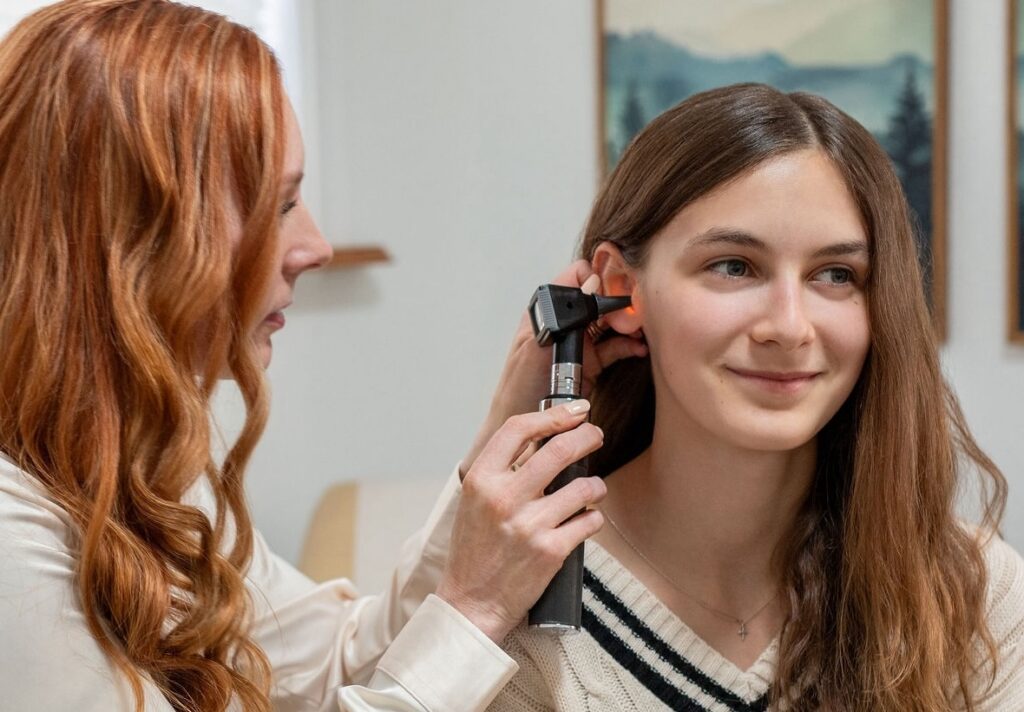
Some things need hands and eyes in the same room: listening to lungs, looking in an ear, checking a joint, or running a quick test. Expect us to recommend coming in for new physical symptoms, minor injuries like sprains or simple cuts, symptoms that are worsening, and anything that needs a test or procedure.
“Come in” doesn’t mean “wait two weeks.” Our urgent care in Rogue River is built around same-day and next-day access for infections, minor injuries, and sudden illness. We can perform a range of onsite testing and treatments when appropriate, including RSV, COVID-19 and flu testing, urinalysis, hemoglobin testing, EKGs, nebulizer treatments, simple wound care and laceration repair, and occasional IV hydration for dehydration. We also keep select acute medications on hand for needs such as nausea, pain, and certain infections. Visits are by appointment only, with no walk-ins, so a quick text or call first gets you on the schedule.
We are a primary care practice offering urgent access, not an emergency department or full-service urgent care center. Some medical situations require a higher level of care, and we’ll help guide you toward the safest option when needed.
Not sure where to go? Read our guide to ER vs. urgent care vs. direct primary care to understand which type of care is right for your needs.
Dial 911 if you are experiencing an life-threatening situation.

When to Skip the Call and Go to the ER or Call 911
If you or someone in your family may be having an emergency, call 911 or go to the nearest emergency room. Don’t delay emergency care to message your provider first. Examples include:
- Chest pain or pressure
- Stroke signs, such as face drooping, arm weakness, confusion, or trouble speaking
- Difficulty breathing or severe shortness of breath
- Severe allergic reaction, including swelling of the face, lips, or throat
- Seizures, fainting, or loss of consciousness
- Severe bleeding or serious injury
- Sudden, severe pain, including the worst headache of your life
- Coughing or vomiting blood, or possible poisoning1
This list isn’t complete. If your instincts say something is seriously wrong, trust them. For more detail, see our urgent care vs. ER decision guide.
Why Continuity Makes Virtual Care Safer and More Effective
This is the point most telehealth marketing leaves out. On an app, you usually meet a clinician for the first time. They don’t know your history, your usual blood pressure, or the medication that gave you trouble last year. They have a few minutes and a short intake form.
When you message your own provider, your history, allergies, medications, and baseline are already known. Follow-up happens with the same person, and there is less guesswork about whether a concern can be handled remotely or needs an exam.
Research supports why this matters. A systematic review in BMJ Open found that 18 of 22 high-quality studies linked greater continuity of care with doctors to lower mortality.2 And a Pediatrics study found children with respiratory infections received antibiotics in 52% of direct-to-consumer telemedicine visits, compared with 31% at primary care offices.3 Because many respiratory infections are viral and do not benefit from antibiotics, the higher prescribing rate raises concerns about unnecessary antibiotic use when care is delivered without an established patient-provider relationship or in-person examination.
It isn’t that telehealth is unsafe, but the relationship behind a virtual visit makes a real difference.
| Factor | One-off telehealth app | Your DPC provider |
| Knows your history | Short intake form | Already familiar |
| Follow-up | Often someone new | The same provider |
| If you need an exam | Referral elsewhere | Same-day or next-day with us |
| Cost per contact | Often a per-visit fee | Included in membership |
Our founder, Heather Friend, DNP, FNP-C, MSCP, brings more than a decade of emergency nursing experience to how we triage. That background helps us recognize when a message is enough, when you should come in, and when you need a higher level of care right away.
How Much Time Virtual Access Saves
For busy families and working professionals across Rogue River, Grants Pass, and Medford, the savings go beyond the drive. You skip the waiting room, the intake forms, the repeated explanations, and the uncertainty of whether something is worth a visit at all.
| Moment | The usual routine | With direct access |
| Rash on your child | Walk-in clinic, long wait | Text a photo from home |
| Symptoms during the workday | Take an afternoon off | Message, then a visit that fits your schedule |
| Medication running low on Friday | Weekend urgent care visit | Short message to your provider |
| Reviewing home blood pressure readings | Round-trip drive for a short talk | Quick virtual visit |
Tips for a Better Virtual Visit
- Share the timeline and any readings, like temperature or blood pressure.
- Describe your symptoms using OLDCART. Be ready to share the onset (when it started), location, duration, character (what it feels like), aggravating or relieving factors, and timing, along with anything else that seems relevant.
- Send clear photos of rashes or wounds in good lighting.
- Mention what you’ve tried, including over-the-counter medications, home remedies, and whether they helped..
- Be in Oregon for virtual visits. Our provider is licensed in Oregon, so you need to be within the state for a virtual visit. When you are traveling, prescriptions can usually be sent to an out-of-state pharmacy.
Is Telemedicine Urgent Care Right for You?
Virtual access is a strong fit if you value quick answers, juggle a busy schedule, are raising kids, or live some distance from the clinic. It doesn’t replace emergency care or hands-on exams when those are needed. The simplest way to know whether a concern can be handled remotely is to ask, and your provider will help you choose the right setting from there.
Your Provider’s Direct Line, Wherever Your Day Takes You
At Resolute Integrative Health, telemedicine urgent care is one part of a membership built around time, access, and a real relationship with your provider. Alongside direct communication and urgent access, we offer primary care, integrative medicine, lab services, women’s health, hormone therapy, and weight-loss support.
We serve Rogue River, Grants Pass, Medford, and surrounding communities from our clinic at 216 E. Main Street in Rogue River. Learn more in our guide to Direct Primary Care in Southern Oregon or review our membership options.
When you’re ready, join Resolute and get your provider’s direct line for questions wherever your day takes you.
Sources:
- American College of Emergency Physicians. (n.d.). Is it an emergency? [Fact sheet]. https://www.emergencyphysicians.org/siteassets/files/pdfs/isitanemergency.pdf
- Pereira Gray, D. J., Sidaway-Lee, K., White, E., Thorne, A., & Evans, P. H. (2018). Continuity of care with doctors: A matter of life and death? A systematic review of continuity of care and mortality. BMJ Open, 8(6), e021161. Retrieved from: https://pmc.ncbi.nlm.nih.gov/articles/PMC6042583/
- Ray, K. N., Shi, Z., Gidengil, C. A., Poon, S. J., Uscher-Pines, L., & Mehrotra, A. (2019). Antibiotic prescribing during pediatric direct-to-consumer telemedicine visits. Pediatrics, 143(5), e20182491. https://doi.org/10.1542/peds.2018-2491